











Witch's ointment
Eau de Parfum

Witches' ointment, also known as witch's flying ointment, was a hallucinogenic ointment used in witchcraft during the Middle Ages. It was a mixture of extremely toxic ingredients, but the exact recipe is unknown, and several occult scholars have died attempting to recreate it. The most commonly mentioned ingredients include the nightshade plant belladonna (belladonna), angelica (Angelica archangelica), hemlock, and the fat of human infants.
The drug produced an ecstatic trance, evoking a powerful sense of flight, images of otherworldly creatures, and a primal sexual desire. These hallucinations form the core of witch mythology, in which they fly to the witches' sabbath at Blåkulla or the Brocken to have sex with the devil and other witches in unholy rites. In the eyes of the medieval church, these were more than just illusions, for the drug created a connection to the devil, allowing him to summon the witch's spirit into his realm. While her body remained in the physical world, she was still guilty of fornication with Satan.
The image of flying witches can be traced back to the use of witches' ointment, but why on a broomstick? The ointment was so toxic that ingesting it would have been fatal. Instead, it was applied to other delicate parts of the body, such as the armpits and, especially, the genitals. Because of the eroticizing effect of the intoxication, the ointment was often rubbed directly onto a phallic object, such as the end of a staff or a broomstick. Thus, the witch didn't ride the broomstick as we imagine it today. In fact, she rode—literally—on it. There are records dating back to around 1200 in which women were found naked and in a trance, pleasuring themselves with the witches' devil's dildo. Considering which aspects of the witches' ointment story have influenced modern perceptions of witches and what has been suppressed, it seems that female sexuality is even more terrifying than witches or devils.
Often bought together:

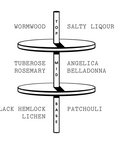
Wormwood, salted licorice

Tuberose, angelica, rosemary, belladonna

Black hemlock, patchouli, lichen

Woody

Thomas Hempel
This information reflects our current state of knowledge. Ingredients may be adjusted by the manufacturer from time to time. We therefore strongly recommend checking the relevant information on the product packaging before use.

Fast shipping
Climate-neutral shipping usually within one working day

100% original goods
We only work directly with the brands and their official distributors

Passion for fragrances
Our heart beats for small manufacturers, not for large corporations

We are here for you!
If you have any questions, you can reach us quickly and easily